 You are viewing the Pensacola, FL location.
A standby generator can give Pensacola, FL homeowners peace of mind during storms, outages, and unexpected power interruptions, but only if it is ready to work when needed. Many homeowners assume their generator will start automatically because it is installed and connected. Unfortunately, a generator that sits for long periods without testing or professional maintenance can develop hidden issues that prevent it from delivering backup power at the worst possible time.
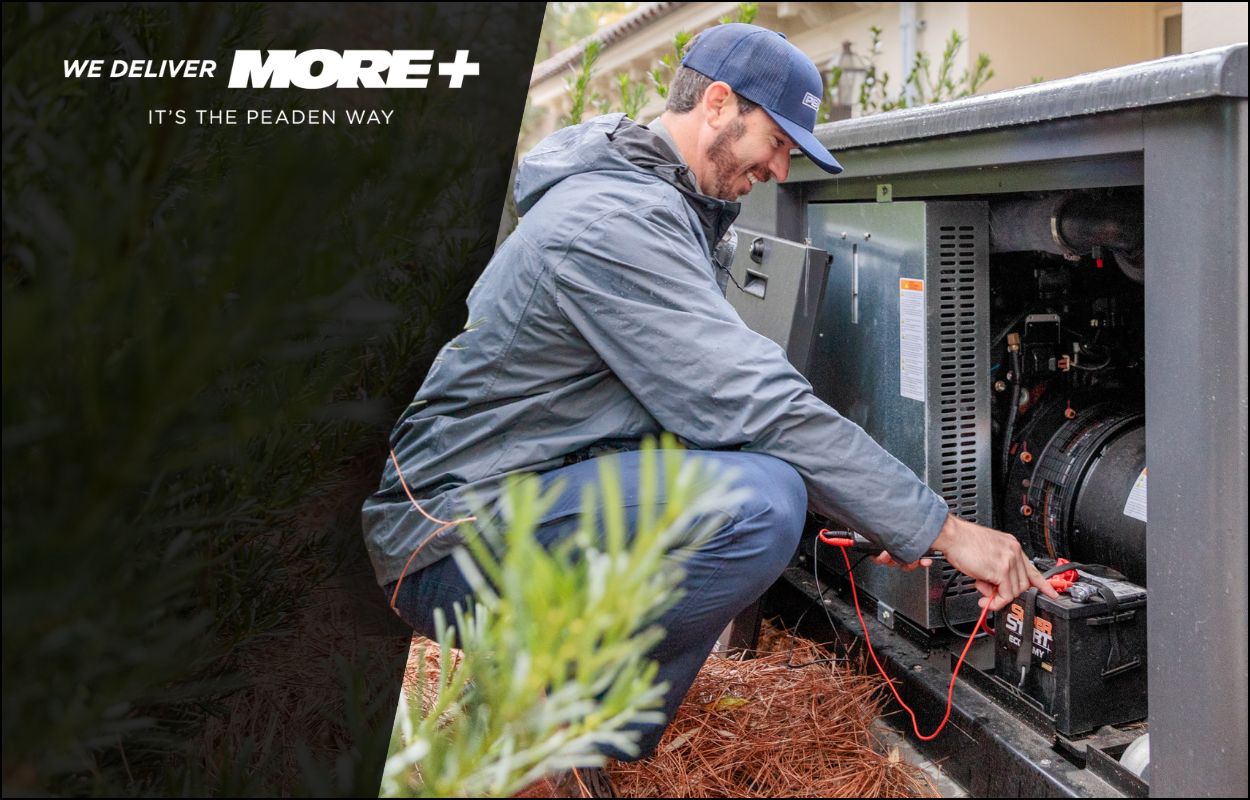
Why Generator Testing Matters
A whole-home generator is not like a light switch that only needs attention when the power goes out. It is a mechanical and electrical system with a motor, battery, controls, fuel connection, transfer switch, wiring, filters, and moving parts. If any part of that system is weak, dirty, corroded, or out of adjustment, the generator may not start or may fail during operation.
Routine testing helps confirm that the generator can start, run, and respond properly when utility power is lost. Many standby generators are designed to perform regular exercise cycles, which are short test runs that keep components active and help reveal performance problems early. When those cycles are skipped, disabled, or ignored, small problems can stay hidden until an outage occurs.
Battery Failure Is a Common Problem
A weak or dead battery is one of the most common reasons a standby generator fails to start. Even when the generator itself is in good condition, it still needs battery power to crank the engine. Heat, age, corrosion, loose connections, and lack of charging can all affect battery reliability. Pensacola’s warm, humid climate can be tough on electrical components. Finding a weak battery during maintenance is far better than discovering it during a power outage.
Fuel Supply Issues Can Stop Backup Power
Generators require a steady fuel supply to function. Issues such as leaks, restrictions, or pressure problems can cause starting failures or stalling, which often go unnoticed when the unit is idle.
Professional maintenance by our Peaden Pros ensures your system operates safely. This is vital for homes relying on backup power for medical equipment, refrigeration, or security during outages.
Mechanical Parts Can Wear Even When the Generator Sits
A generator that is not running regularly can still experience wear. Oil can age, filters can become dirty, belts and hoses may weaken, and moisture or pests can affect the unit. Outdoor equipment is also exposed to dirt, leaves, humidity, and debris.
During a maintenance visit, our Peaden Pros can inspect key components, check fluid levels, review warning codes, evaluate ventilation, and look for signs of leaks or damage. These steps help reduce the risk of unexpected failure when the generator is needed most.
Signs Your Generator Needs Maintenance
Homeowners should schedule service if they notice:
- Missed or failed exercise cycles
- Warning lights or error messages
- Slow starting
- Unusual sounds or vibration
- Visible leaks or corrosion
- A generator that has not been serviced within the past year
Even if everything seems normal, annual maintenance is a smart way to support dependable performance.
Ask about Peaden’s SmartCare Plan for ongoing maintenance that helps keep essential home systems in better condition year-round. Schedule generator service today and make sure your backup power is ready before the next outage.