 You are viewing the Panama City, FL location.
Safe electrical power begins with understanding how much demand your home’s circuits can handle. A circuit overload occurs when connected appliances and devices draw more electrical current than the circuit was designed to carry. This excess demand can overheat wiring, repeatedly trip breakers, damage equipment, and create a potential fire hazard. Peaden Air Conditioning, Plumbing & Electrical helps homeowners in Panama City, FL, identify overloaded circuits and make safer decisions about everyday power use.
Why High-Demand Appliances Need Extra Care
Some household appliances require significantly more electricity than lamps, televisions, chargers, and other small devices. Space heaters, hair dryers, irons, microwaves, and window air conditioners are common examples of high-draw equipment. Using several of these appliances on the same circuit can quickly exceed its safe capacity, even when they are plugged into different outlets.
Whenever possible, follow the practical rule of running only one high-demand appliance per circuit at a time. Avoid using a space heater and hair dryer from outlets in the same room, for instance, especially if those outlets share a circuit.
Power strips do not increase the electricity a circuit can safely provide; they only add outlets. Homeowners should avoid daisy-chaining power strips, stacking adapters, or using light-duty extension cords for heaters and window ACs. If using a power strip, choose a quality model with built-in overload protection and follow the manufacturer’s instructions.
Warning Signs of an Overloaded Circuit
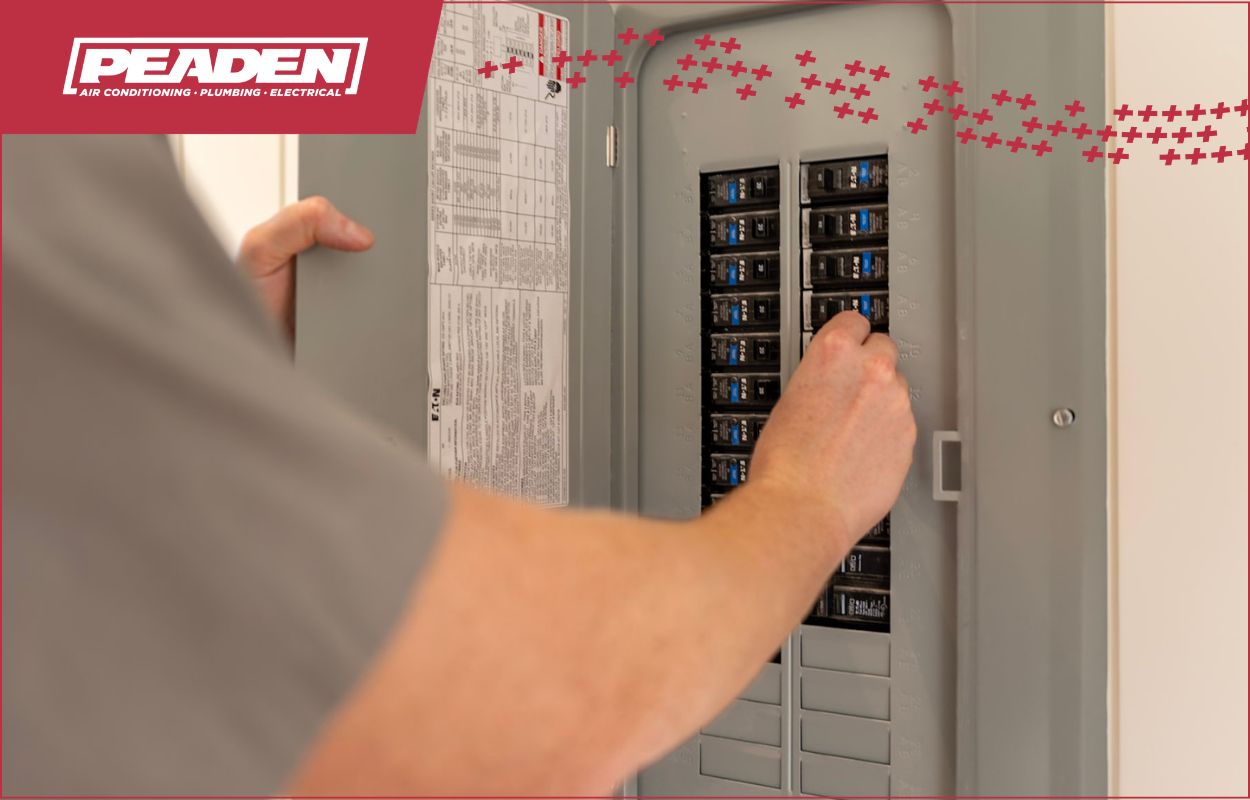
Circuit breakers are designed to interrupt electrical flow when demand becomes unsafe. An occasional trip may result from temporarily using too many appliances, but frequent breaker trips can indicate an ongoing capacity or wiring problem.
Other warning signs include:
- Warm or discolored outlet and switch covers
- Buzzing sounds near an outlet or electrical panel
- Lights that dim when a large appliance starts
- Burning or melted-plastic odors
- Flickering lights or inconsistent power
- Plugs that feel unusually hot
- Breakers that trip repeatedly after being reset
Stop using the affected circuit when you notice heat, buzzing, smoke, sparks, or a burning odor. Unplug connected devices only when it is safe to do so, and do not continue resetting a breaker without determining why it is tripping. Electrical problems rarely correct themselves, and repeated resets may allow a hazardous condition to worsen.
Understand GFCI and AFCI Protection
Modern electrical systems use specialized protection to minimize risks. Ground-fault circuit interrupter (GFCI) outlets protect against electrical shock in moisture-prone locations, including kitchens, bathrooms, laundry rooms, garages, and outdoors.
Arc-fault circuit interrupter (AFCI) protection detects dangerous arcing to prevent fires in bedrooms and living spaces. Test GFCI outlets regularly via their test and reset buttons, and ensure a qualified electrician inspects any outlet that fails to operate correctly.
Plan Ahead for New Electrical Equipment
An EV charger, hot tub, workshop tool, or other major electrical addition may require a dedicated circuit or electrical panel upgrade. Our Peaden Pros can evaluate your electrical panel, calculate current demand, and determine whether additional circuits can be installed safely. When upgrades are necessary, we can recommend code-compliant options suited to your home and future electrical needs.
Call today to discover The Peaden Way: Service Is Our Passion, Safety Is Our Priority, Satisfaction Is Our Promise.