 You are viewing the Tallahassee, FL location.
Power outages can interrupt your home in an instant, especially during heavy storms, high winds, and unpredictable grid issues. For homeowners considering whole-house generator installation in Tallahassee, FL, planning matters just as much as the equipment itself. A whole-home generator must be properly sized, safely placed, correctly fueled, and installed in accordance with local requirements so it can operate reliably when your family needs backup power most.
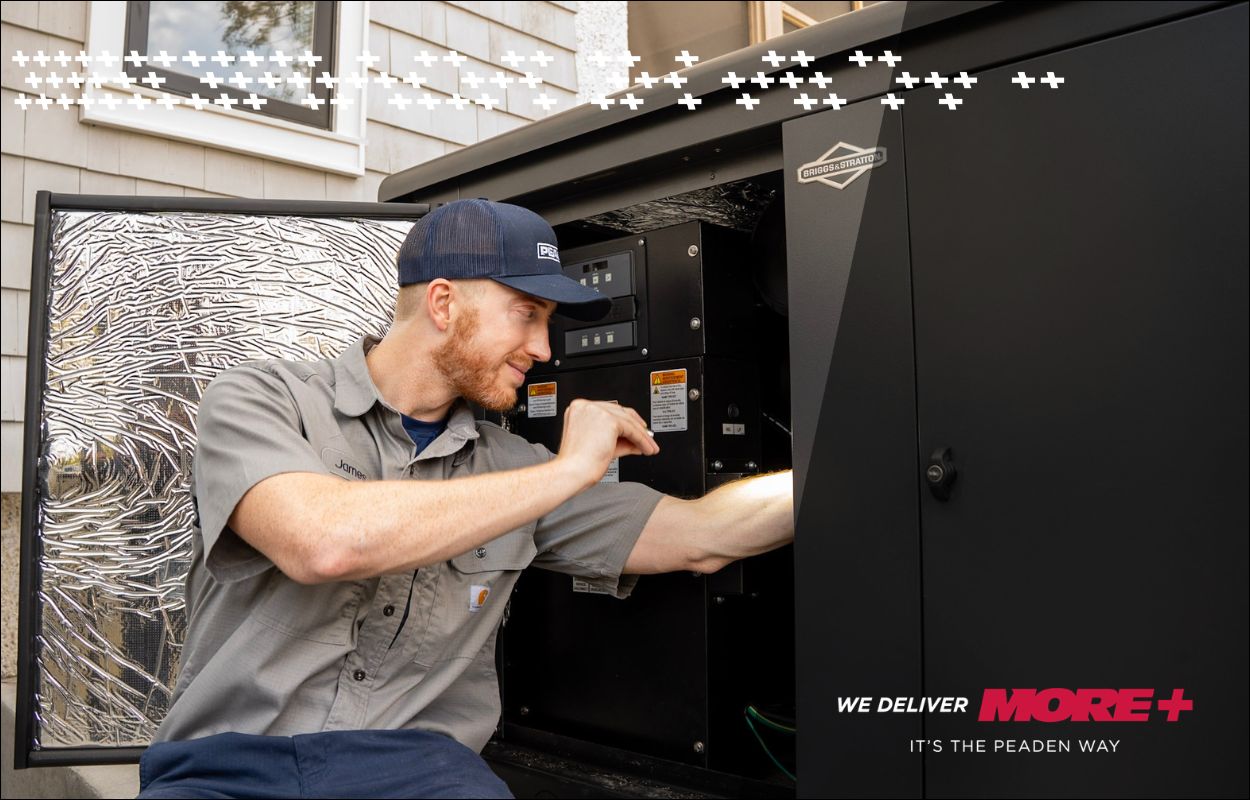
Unlike a portable generator, a whole-home generator is permanently installed and connected to your electrical system through a transfer switch. When utility power goes out, the system can automatically turn on and supply power to selected circuits or, depending on the setup, to most of the home. Before installation begins, our Peaden Pros help homeowners make smart decisions based on electrical demand, property layout, fuel access, and safety.
Start With a Load Calculation
Generator sizing should never be based on guesswork. A professional load calculation determines how much power your home needs during an outage. Some homeowners want to power only the essentials, while others want more complete coverage.
Larger systems, such as air conditioners, electric water heaters, and well pumps, may require extra power at startup. If the generator is too small, it may overload or fail to support your needs. If it is larger than necessary, you may end up spending more than needed.
Choose the Right Fuel Type
Fuel choice is another important part of generator planning. Whole-home generators commonly run on natural gas or propane. The best option depends on what is available at your property and how long you want the system to run during an extended outage.
Natural gas can be convenient for homes already connected to utility gas because there is no on-site tank to refill. Propane may be a strong option for homes without natural gas service, but it requires a properly sized storage tank. Fuel supply affects runtime, installation layout, and long-term convenience, so this decision should be made with professional guidance.
Think Carefully About Placement
A generator cannot be installed just anywhere outside the home. Placement must account for safe exhaust clearance, ventilation, drainage, noise, fuel connections, service access, and distance from windows, doors, vents, and property lines.
In Tallahassee, the weather is also a major consideration. Heavy rain, saturated ground, falling branches, and storm debris can all affect equipment placement. A professional installation helps position the generator in a location that supports safe operation and easier maintenance while meeting code requirements.
Plan Before the Next Outage
A whole-home generator gives homeowners more confidence during storms and power interruptions. It can help keep food cold, lights on, indoor comfort steady, and essential devices powered. For families with children, older adults, medical equipment, or remote work needs, reliable backup power can make a major difference.
Peaden Air Conditioning, Plumbing & Electrical helps Tallahassee homeowners plan every step of the installation process. From load calculations and fuel selection to placement, permitting, and final setup, our Peaden Pros provide the expertise needed to prepare your home for the next outage before it happens.