 You are viewing the Panama City, FL location.
Power outages are more than an inconvenience, especially for homeowners along the Gulf Coast. Storms, heavy rain, high winds, and grid interruptions can leave a home without lighting, cooling, refrigeration, medical equipment, internet, or essential appliances. That is why more families are considering whole-house generator installation in Panama City, FL as a practical investment in comfort, safety, and peace of mind. However, before installation, there are several important factors homeowners should understand.
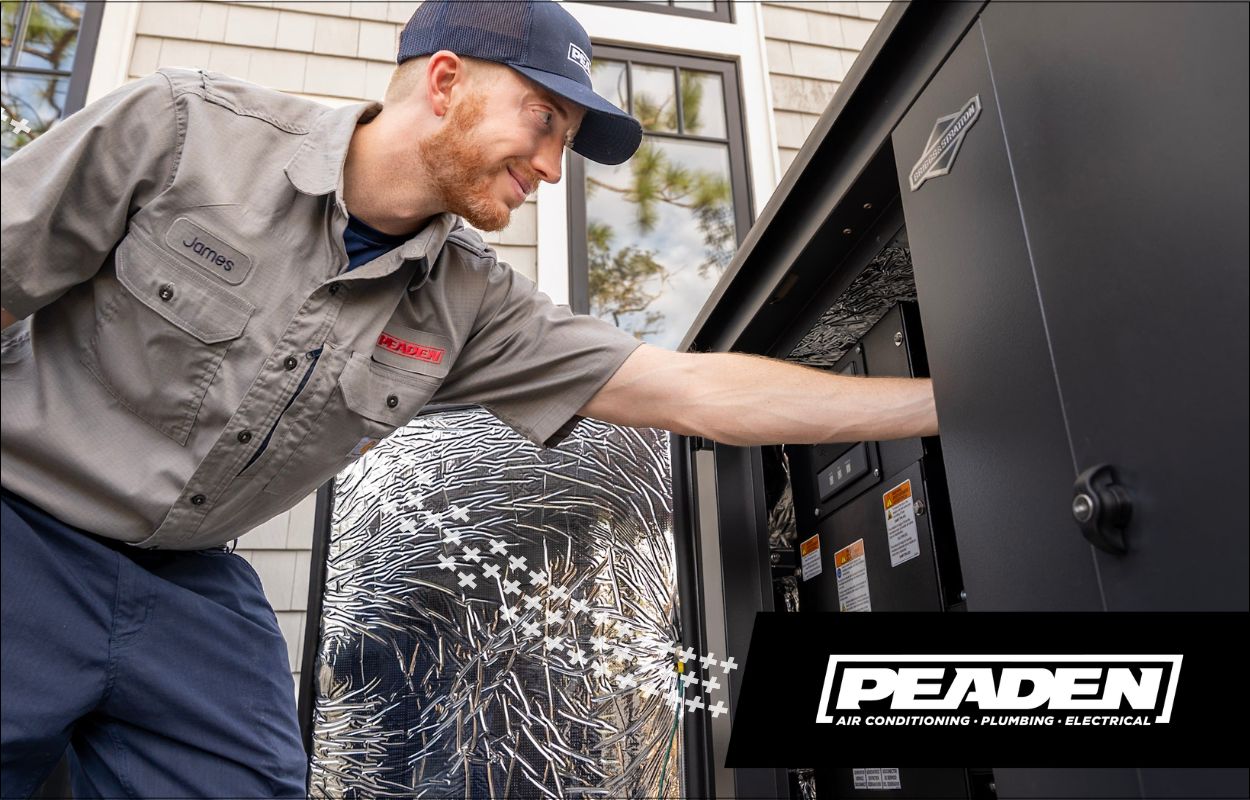
Your Home Needs a Proper Load Calculation
Generator sizing is not something to be guessed at. A unit that is too small may not support your home’s essential electrical needs, while a system that is larger than necessary may cost more than you need to spend.
A professional load calculation helps determine what your generator should power during an outage. Some homeowners only want essentials, such as the refrigerator, HVAC system, lights, sump pump, and key outlets. Others want nearly everything in the home to continue operating normally.
Our Peaden Pros evaluate your home’s electrical demand, appliance startup requirements, and comfort priorities to help recommend the right generator capacity.
Fuel Type Matters
Whole-home generators typically run on natural gas or propane. The right fuel source depends on your home, local availability, installation requirements, and how long you want your generator to operate during an extended outage.
Natural gas is convenient for homes already connected to a gas utility line because it does not require refilling a tank. Propane is a strong option for homes without access to natural gas, though it requires an appropriately sized storage tank.
Our Peaden Pros can help homeowners compare available fuel options and understand how fuel supply affects generator performance during longer outages.
Placement Must Be Carefully Planned
A standby generator cannot be placed just anywhere. It must be installed in a safe, code-compliant location with proper clearance from windows, doors, vents, property lines, and combustible materials. Placement also needs to account for airflow, service access, noise considerations, drainage, and fuel connection.
In coastal areas like Panama City, placement may also involve protecting the system from flooding risks, storm exposure, and salt air whenever possible. A professional installation helps ensure your generator is positioned safely and efficiently.
Permitting and Code Compliance Are Essential
Whole-home generators connect directly to your electrical system, which means permitting and code compliance matter. Installation often involves electrical work, fuel connections, transfer switch installation, and inspection requirements.
The transfer switch is especially important because it safely separates your home from the utility while the generator is operating. This protects your electrical system, utility workers, and your household. Working with licensed professionals helps prevent unsafe installations, failed inspections, and performance problems after the system is needed most.
Trust the Peaden Pros
Peaden Air Conditioning, Plumbing & Electrical provides professional generator guidance and installation from our Peaden Pros. We help homeowners understand sizing, fuel options, placement, permitting, and long-term reliability so they can invest with confidence. With the right whole-home generator, your home is better prepared for the next outage before it happens.